

Buy High Quality Camping Apparel Online: 2026 Guide
Table of Contents
- What to Look for When You Buy High Quality Camping Apparel Online
- Camping Apparel Comparison: Features and Pricing at a Glance
-
Top Picks for Camping Apparel Online
- VOTAGOO Quiet Hunting Jacket: Silent Warmth for Cold Mornings
- Heated Hunting Jacket for Men: Battery-Powered Warmth for Winter Camping
- VOTAGOO Hunting Pants: Abrasion-Resistant Comfort on Rough Terrain
- VOTAGOO Long Sleeve Tactical Shirt: Breathable Base Layer for Active Days
- CALTO H75470 Hiking Style Boots: Rugged Looks for Camp and Trail
- How to Layer Clothes for Camping: A Three-Layer System
- Essential Camping Clothing Checklist for Every Trip
- Best Outdoor Clothing Brands for Camping: How to Judge Quality
- Gear Maintenance and Care for Long-Lasting Camping Apparel
- Conclusion: Buy High Quality Camping Apparel Online with Confidence
- Frequently Asked Questions
Last Updated: September 21, 2026
What to Look for When You Buy High Quality Camping Apparel Online
When you buy high quality camping apparel online, photos only tell half the story. The real difference lives in fabric specs, seam construction, and how the garment moves on the trail. Check three things before buying, fabric performance, fit, and weather resistance, and you'll replace gear far less often.
Fabric Performance: Moisture-Wicking, Breathable, and Durable
Moisture-wicking fabric moves sweat away from your skin so it can evaporate instead of chilling you; breathability lets that vapor escape. Durability comes from ripstop weaves, reinforced knees and seats, and double-stitched seams.
Fit, Mobility, and Ergonomic Design
Ergonomic design means the garment is cut for movement, not for standing still in a fitting room. Raglan sleeves, gusseted crotches, and stretch panels at the knees and waist let you squat, crawl, and climb without the fabric fighting back.
Camping Apparel Comparison: Features and Pricing at a Glance
The table below summarizes the picks in this guide so you can compare fabric, key features, and price at a glance.
| Item | Price | Key Fabric | Standout Feature | Best For |
|---|---|---|---|---|
| VOTAGOO Quiet Hunting Jacket | $59.99 | Water-repellent, silent shell | 10 pockets, adjustable hood | Cold, quiet mornings |
| Heated Hunting Jacket for Men | $99.99 | Waterproof polyester | 5 heating zones, 12V battery | Winter camping |
| VOTAGOO Hunting Pants | $54.99 | 94% polyester, 6% spandex | Reinforced knees and seat | Rough terrain |
| VOTAGOO Long Sleeve Tactical Shirt | $52.99 | Duratex ripstop blend | Padded elbows, 1/4 zip | Active base layer |
| CALTO H75470 Hiking Style Boots | $98.00 | Synthetic upper, rubberized sole | Elevated insole, rugged sole | Camp and trail wear |
Top Picks for Camping Apparel Online
Each pick below solves a different problem, from silent movement to battery-powered warmth.

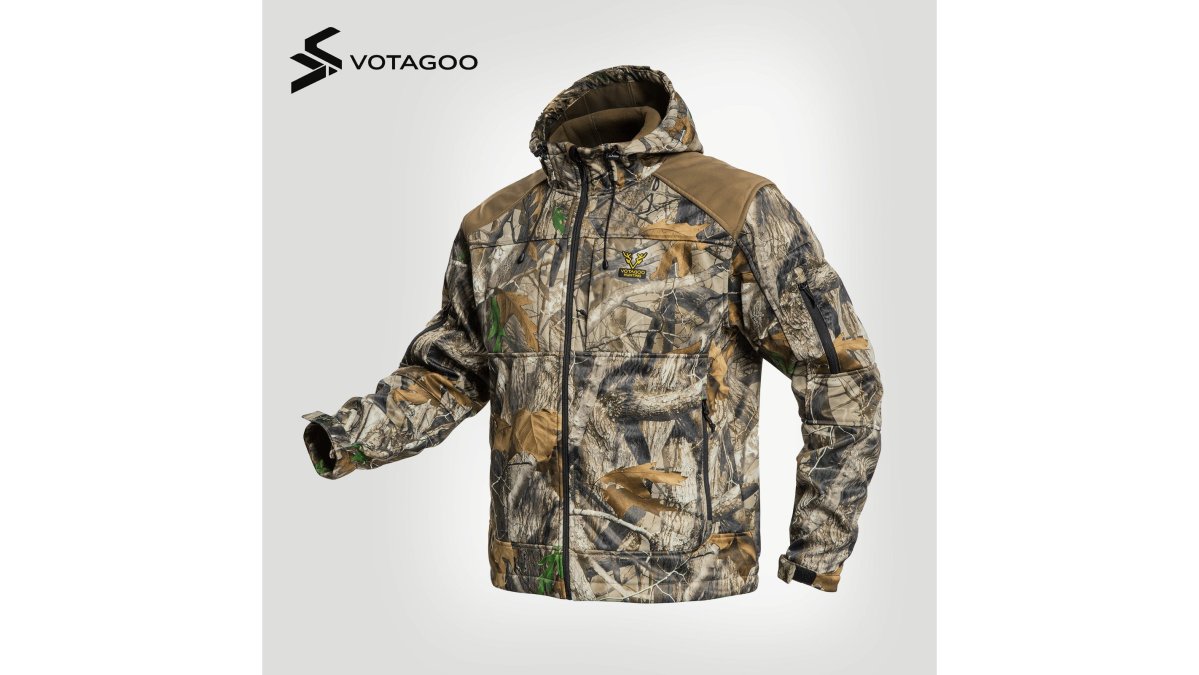
VOTAGOO Quiet Hunting Jacket: Silent Warmth for Cold Mornings
Cold-weather camping and early-season hunts demand a jacket that stays quiet when you move. The VOTAGOO Quiet Hunting Jacket handles light-to-medium cold and wet conditions with a water-repellent outer and a soft, silent interior.

Heated Hunting Jacket for Men: Battery-Powered Warmth for Winter Camping
For sub-freezing trips, the Heated Hunting Jacket for Men generates heat instead of just trapping it. Five carbon fiber heating zones (two front, three back) reach up to 149°F, with three settings controlled from a discreet inner lapel panel and hidden indicator lights that keep you from giving away your position.
VOTAGOO Hunting Pants: Abrasion-Resistant Comfort on Rough Terrain
The VOTAGOO Hunting Pants are the workhorse layer for brushy, rocky ground. The 94% polyester, 6% spandex blend pairs a soft-shell exterior with a fleece-lined interior, so they're warm without being bulky. The quick-drying fabric repels water and resists scratches.
VOTAGOO Long Sleeve Tactical Shirt: Breathable Base Layer for Active Days
The VOTAGOO Long Sleeve Tactical Shirt works as a base layer or a standalone shirt in mild weather. The Duratex fabric (65% polyester, 35% cotton) is water-resistant, ripstop, and quick-drying, with dirt-proof and abrasion-resistant properties.
CALTO H75470 Hiking Style Boots: Rugged Looks for Camp and Trail
The CALTO H75470 Hiking Style Boots deliver a trekking look with a built-in elevation insole, adding 3.2 inches of height. The synthetic upper, cloth lining, and fully rubberized sole are double-stitched for durability, and the standard D width fits a regular foot.
How to Layer Clothes for Camping: A Three-Layer System
Layering is how experienced campers handle temperature swings without carrying three separate outfits. The three-layer system pairs a moisture-wicking base layer, an insulating mid-layer, and a weather-resistant shell. Each layer does one job, and you add or remove them as conditions change.
- Base layer: Wicks sweat and manages moisture. Choose synthetic or wool, never cotton.
- Mid-layer: Traps heat. Fleece or synthetic insulation works for most conditions.
- Outer shell: Blocks wind and rain while staying breathable. Look for water-resistant, seam-sealed construction.
Base Layer Materials: Synthetic vs. Merino vs. Blends
The base layer touches your skin, so the material choice matters more than the brand logo.
- Polyester and polyester/spandex blends dry fastest, cost the least, and handle repeated washing well. The trade-off is odor retention on multi-day trips.
- Merino wool resists odor naturally, regulates temperature across a wider range, and feels warm even when slightly damp. It costs more, dries slower, and needs gentler washing.
- Merino/synthetic blends split the difference: odor resistance from wool, durability and faster drying from synthetic. A 150-200 GSM blend is the most versatile single base layer for three-season camping.
Mid-Layer Options: Fleece, Synthetic Insulation, and Down
Mid-layers are where warmth-to-weight gets decided.
- Fleece is breathable, durable, and cheap, but bulky for the warmth it delivers. Grid fleece moves moisture better than standard fleece.
- Synthetic insulation keeps warming even when wet, making it the safer choice for damp climates, and it packs smaller than fleece.
- Down offers the best warmth-to-weight ratio and packs down smallest, but loses loft when wet. Hydrophobically treated down resists moisture better than untreated down but is not waterproof.
A common pattern is a grid fleece for active days and a synthetic or down puffy for camp and sleep.
Climate-Specific Layering: Alpine vs. Desert vs. Temperate Forest
The same three-layer framework produces different kits depending on where you camp.
The Layering Mistakes That Ruin the System
- Wearing a waterproof shell as your only layer. It blocks rain and traps sweat. Use water-resistant breathable shells for most camping.
- Starting the hike already warm. You'll overheat within a mile. Start slightly cool and add layers as you warm up.
- Ignoring the hands, head, and feet. A warm hat and gloves change your comfort more than an extra torso layer.
- Packing one base layer. Two base layers (one worn, one dry) is the minimum for any trip with sweat and cold nights.
Essential Camping Clothing Checklist for Every Trip
Pack to the conditions, not to a generic list. This checklist covers the essentials for a three-season camping trip.
- Two moisture-wicking base layers (one worn, one dry)
- One insulating mid-layer, fleece or synthetic
- Water-resistant, breathable outer shell
- Quick-drying hiking pants with reinforced knees
- One pair of warm camp pants or fleece-lined pants for evenings
- Wool or synthetic socks, two to three pairs
- Waterproof, breathable footwear that fits with your socks
- Warm hat and gloves for cold mornings
- Rain jacket or poncho as a backup layer
Best Outdoor Clothing Brands for Camping: How to Judge Quality
Judging a brand comes down to what they disclose, not what they claim. The best outdoor clothing brands for camping publish fabric specs, weight, and construction details. If a listing can't tell you the fabric blend or the seam construction, you're buying on faith.
Four signals separate serious gear from marketing:
- Named materials and blends: "94% polyester, 6% spandex" tells you more than "premium fabric."
- Construction specifics: Reinforced knees, double-stitched seams, and YKK zippers are verifiable.
- Stated limitations: A brand that says "water-repellent, not waterproof" is being honest with you.
- Real use cases: Gear described for specific conditions is designed with intent.
The Spec Sheet Decoder: What the Numbers Actually Mean
Most shoppers skim past the spec block because the units look like noise. Here's how to read the numbers that matter.
The Sustainability and Manufacturing Angle Most Brands Won't Publish
Three questions worth asking before you buy:
- Is the shell fabric bluesign-approved or OEKO-TEX certified? These are third-party textile safety and environmental standards, not marketing labels.
- Is the down RDS-certified? RDS verifies the down wasn't live-plucked or force-fed. If a brand uses down and doesn't mention RDS, ask.
- Does the brand publish a factory list or a repair program? Both are strong signals that a brand expects its gear to last.
bluesign approved textile standard overview Responsible Down Standard certification details
Gear Maintenance and Care for Long-Lasting Camping Apparel
Care extends the life of technical apparel more than any other habit. Most camping clothing fails from improper washing, not from wear. Dirt clogs breathable fabrics, and heat damages water-repellent treatments and synthetic insulation.
- Wash technical garments in cold water on a gentle cycle.
- Skip fabric softener and dryer sheets; they coat fibers and reduce breathability.
- Air dry when possible. If you use a dryer, keep it on low heat.
- Reapply a DWR treatment when water stops beading on the surface.
- Remove battery packs before washing heated gear, place the charging cable in a pocket, and use a laundry bag to protect the wires.
Conclusion: Buy High Quality Camping Apparel Online with Confidence
The gap between gear that lasts and gear that disappoints comes down to a few verifiable details: fabric blend, seam construction, and honest weather ratings. When you buy high quality camping apparel online, buy from a source that publishes those specs and stands behind the product.
Frequently Asked Questions
What should I look for when buying camping clothes online?
Focus on fabric performance and construction details rather than photos alone. Look for moisture-wicking and breathable materials, reinforced knees and seat areas, seam-sealed or water-resistant finishes, and zippered pockets with waterproof interiors. Check the temperature rating and intended season, plus whether the piece layers well under a shell. Reviews that mention real trail conditions, sizing accuracy, and durability after repeated washes tell you more about quality than any marketing copy.
How do I layer clothes for camping in different climates?
Use a three-layer system: a moisture-wicking base layer against your skin, a mid-layer such as fleece or synthetic insulation for warmth, and a weather-resistant outer shell. In mild, dry conditions, the base layer alone often works. For cold, wet trips, add the mid-layer and a water-repellent shell. Adjust by removing or adding layers as your activity level and the temperature change through the day.
Which camping apparel items belong on an essential checklist?
A practical checklist covers moisture-wicking base layers, an insulating mid-layer, a water-resistant outer shell, durable pants with reinforced knees, wool or synthetic socks, broken-in hiking footwear, a warm hat, and gloves. Add a rain jacket and quick-drying shorts for warmer trips. Pack one spare base layer and socks per day for multi-day outings, and choose pieces that mix and match so you carry less while staying ready for changing weather.
How can I tell if camping apparel is actually high quality before ordering?
Read the material specs: blends like polyester and spandex for stretch, ripstop weaves for tear resistance, and DWR finishes for water repellency. Check for reinforced stress points, YKK zippers, and double-stitched seams. Look for brands that publish fabric weights, care instructions, and real customer feedback about durability. A brand that explains its construction and stands behind its gear is a stronger signal than one that only shows lifestyle photos.
How do I care for camping apparel so it lasts longer?
Wash technical garments in cold water on a gentle cycle with mild detergent, and avoid fabric softeners that clog moisture-wicking fibers. For heated gear, remove the battery pack, secure the charging cable in its pocket, and use a laundry bag before washing. Air-dry when possible to protect water-repellent finishes. Reapply a DWR treatment when water stops beading on the surface, and store clean, dry gear loosely rather than compressed.