

Durable Fishing Tackle for Rocky Shores: 7 Picks
Table of Contents
- What Makes Tackle Durable Enough for Rocky Shores
- Quick Comparison: Rocky Shore Tackle by Category
- Rods That Survive Rock Ledges and Boulder Fields
- The Best Fishing Line for Rocky Areas: Abrasion and Shock
- Fishing Rigs for Rocky Ground: Keeping Bait Off the Snag Line
- How to Avoid Snags When Fishing Around Rock
- Rock Fishing Safety Gear You Should Not Skip
- Conclusion: Build a Rocky Shore Kit That Lasts
- Frequently Asked Questions
Last Updated: October 15, 2026
What Makes Tackle Durable Enough for Rocky Shores
Durable fishing tackle for rocky shores is gear built to survive abrasion, salt corrosion, and the shock of fighting fish over ledges and boulder fields. The difference between a good day and a lost fish usually comes down to three things: a rod with real backbone, line that resists rock rash, and a rig that keeps bait off the snag line.
At Outdoor Wilderness Supply, we see the same pattern every season. Anglers buy tackle that performs fine in open water, then watch it fail the moment it touches structure. Rocks cut line. Salt eats metal. A rod that feels crisp on a boat ramp goes soft when a fish dives under a ledge.
Below, we break down the tackle categories that matter for rocky shore fishing, what to look for in each, and how to build a kit that holds up cast after cast.
American Sportfishing Association industry data
Quick Comparison: Rocky Shore Tackle by Category
| Category | What Matters Most | Example Pick | Best For |
|---|---|---|---|
| Rod | Backbone, corrosion resistance | OL' Salty Spinning Rod | Fighting fish from structure |
| Main line | Abrasion resistance, low stretch | PE4 Braided Line | Long casts over rock |
| Leader | Shock absorption, invisibility | Yo-Zuri TopKnot Fluorocarbon | Bumping bottom around rock |
| Rig | Bait presentation off snags | Rig Mate Dropper Loop Rigs | Hi-lo bottom fishing |
| Hooks | Sharpness, holding power | Mustad O'Shaughnessy | Long natural baits |
That table is the short version. The rest of this article explains why each piece earns its place.

Rods That Survive Rock Ledges and Boulder Fields
The right rock-fishing rod pairs a sensitive tip with genuine lifting power. You need to feel a subtle tap through current, then turn a fish before it reaches the rocks. Soft rods lose that fight.

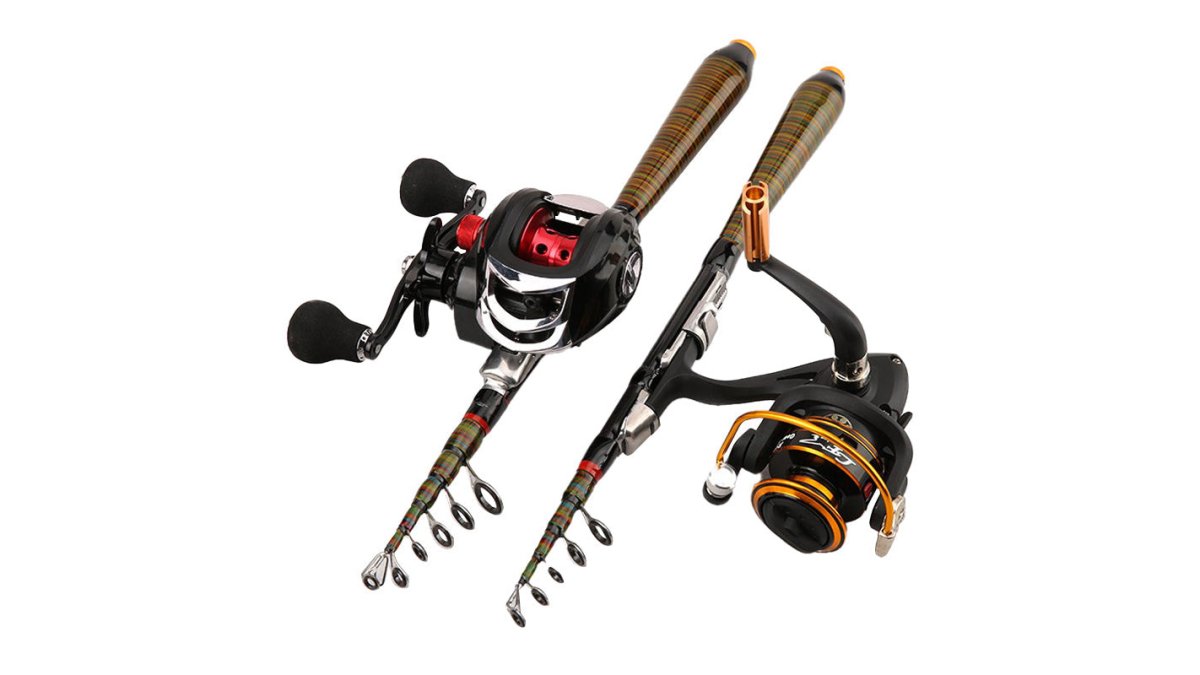
Telescopic Rock Fishing Rod: Packable Carbon for Travel
This is the rod we recommend for anglers who hike to remote ledges. The carbon fiber blank keeps the rod light at 85 grams, and it collapses to a pocket-sized 31 centimeters across five sections. A 1500-gram weight test means it can lift heavy fish without folding, and the soft tone helps absorb sudden runs.
The trade-off is obvious: telescopic rods trade some casting distance for portability. If you walk a long way to fish, that trade is worth it. If you cast from the truck, a two-piece rod will outperform it.
NOAA saltwater fishing regulations and guidance
OL' Salty Spinning Rod: Saltwater Corrosion Resistance
Salt is the quiet killer of rock-fishing gear. The OL' Salty Spinning Rod was built specifically to handle it, with components chosen to resist corrosion and a design that stands up to powerful gamefish. It comes in multiple lengths and actions, so you can match it to how you fish.
The ergonomic handle grips well even when wet, which matters when you are balancing on slick rock.
Magictail Inshore Rods: Backbone for Pulling Fish From Structure
When a fish buries itself in heavy structure, you need a rod that can pull it out. The Magictail Inshore Series pairs a sensitive tip with a serious reserve of backbone, thanks to a carbon fiber blank with an additional carbon wrap for hoop strength.
Oversized K Guides let bulky leader knots pass freely during a fight, and the ergo reel seat cuts fatigue on long days.
The Best Fishing Line for Rocky Areas: Abrasion and Shock
The best fishing line for rocky areas resists abrasion first and stretches second. Braid handles abrasion and casting distance; fluorocarbon handles shock absorption and invisibility at the leader. Run both.
Braided Main Line and Fluorocarbon Leaders
Braid is the workhorse. The PE4 Braided Line comes in a 300-meter spool across nine colors, which makes it easy to track line movement in current. Braid's low stretch means you feel bottom composition and set hooks fast, both critical around rock.
The catch is that braid has almost no shock absorption and it cuts easily on sharp edges. That is why you run a leader. The Yo-Zuri TopKnot Fluorocarbon Leader is abrasion resistant, shock resistant, and maintains its clarity after extended use. It is virtually invisible and holds knots well, which matters when a fish makes one last run into the rocks.
For toothy fish or heavy structure, some anglers step up to a steel wire leader. The 20-piece Anti Bite Steel Wire Leader set with swivels comes in lengths from 15 to 30 centimeters and handles that job.
Fishing Rigs for Rocky Ground: Keeping Bait Off the Snag Line
Fishing rigs for rocky ground exist to solve one problem: presenting bait near structure without burying your hook in it. The dropper loop, also called a hi-lo or paternoster rig, does this better than most setups.
Telescopic Rock Fishing Rod Spinning Fly Carp Feeder Carbon Fiber Pesca Mini →
The Rig Mate Pre Tied Dropper Loop Leader Rigs remove the hardest part, tying consistent loops. Each spool carries evenly spaced, pre-tied dropper loops with knots pulled tight and line that is not chafed. You cut the length you need, attach tackle, and fish. Available in 20, 30, 40, 60, and 80-pound ratings.
The standard setup puts a sinker on the bottom loop and one or more hooks on the loops above it. That keeps your bait suspended off the bottom, away from the snag zone.
Hook choice matters here too. The Mustad 3407-DT O'Shaughnessy is a forged wire hook built for long natural baits like fish heads, squid, or crab. Its MTL-V1 point cuts penetration resistance significantly compared to standard points. For bait that needs to stay put, the Mustad 92641-BR Baitholder has barbs along the shank to hold worms, crabs, and fish chunks in position.
How to Avoid Snags When Fishing Around Rock
Learning how to avoid snags when fishing around rock comes down to rig geometry and retrieve angle. Keep bait above the snag line, keep your rod tip high, and retrieve fast enough that your weight skips over structure instead of settling into it.
Here is what works in practice:
- Use a dropper loop rig so bait sits above the sinker, not on the bottom
- Cast uptide or upcurrent so your rig moves away from rock, not into it
- Retrieve with the rod tip high to lift your weight over ledges
- Switch to a lighter sinker when possible, since heavy weights wedge into crevices
- Check your knot and leader after every snag, even a clean release
A common mistake is fishing too heavy. Anglers add weight to hold bottom, then spend the day re-rigging because the weight lodges in rock. If you can hold bottom with less weight and a longer cast, do it.
Rock Fishing Safety Gear You Should Not Skip
Rock fishing safety gear is not optional equipment. Wet rock is slick, waves arrive without warning, and a fall on a boulder field ends the trip. The gear below is the minimum we would take.
- A quality personal flotation device, worn, not stowed in a bag
- Studded wading boots or cleated footwear for grip on wet rock
- A waterproof headlamp if you fish dawn or dusk
- A throw rope if you fish alone near deep water
- A first aid kit sized for cuts and punctures
A stainless steel rod holder also helps. The Automatic Stainless Steel Fishing Pole Holder is rust resistant, inserts into ground or rock crevices, and uses an adjustable spring trigger to react to bites. It frees your hands for rigging and keeps your rod secure when you step away.
U.S. Coast Guard boating and water safety resources
Conclusion: Build a Rocky Shore Kit That Lasts
Rock fishing punishes gear that was not built for it. The anglers who land fish consistently are the ones whose tackle survives the first hundred casts, not the ones who replace it after every trip.
Outdoor Wilderness Supply stocks the pieces that hold up: corrosion-resistant rods like the OL' Salty, abrasion-resistant leaders like the Yo-Zuri TopKnot, and pre-tied rigs that keep bait off the snag line. Our catalog is built for anglers who fish real structure, not just calm water.

Choose options from Outdoor Wilderness Supply and build a rocky shore kit that lasts season after season.
Frequently Asked Questions
What tackle is best for fishing from rocky shores?
Rocky shore tackle needs abrasion resistance first. A graphite or carbon rod with a sensitive tip and real backbone, braided main line in the 20-40 lb class, and a fluorocarbon leader rated for the structure you fish covers most situations. Add a paternoster or dropper loop rig to keep hooks above the snag line, plus a stainless rod holder so your rod is not resting on wet rock. Match hook size to your bait, and check your leader for nicks after every fish or snag.
How do you keep fishing tackle from snagging on rocks?
Keep bait off the bottom. A dropper loop rig, sometimes called a hi-lo or paternoster, holds hooks above the sinker so they ride clear of jagged edges. Use the lightest sinker the current allows, and retrieve with the rod tip high so the rig lifts rather than drags. When you do hang up, do not yank. Slack the line, let the swell work the rig free, then lift steadily. Pre-tied dropper loop leaders remove the guesswork and keep loop spacing consistent.
What fishing line is best for rocky shore fishing?
Braided main line paired with a fluorocarbon leader is the standard setup for rocky areas. Braid gives you thin diameter, low stretch, and long casts, while fluorocarbon handles abrasion at the business end and stays nearly invisible in clear water. Yo-Zuri TopKnot Fluorocarbon Leader is built for abrasion resistance and shock resistance with a thin diameter to strength ratio, which matters when a fish turns toward structure. Check the leader after every snag and retie if you feel roughness.
Which rigs work best over rough, rocky ground?
Dropper loop rigs and hi-lo (paternoster) setups work best because they suspend hooks above the sinker. Rig Mate Pre Tied Dropper Loop Leader Rigs come in 20, 30, 40, 60, and 80 lb ratings with evenly spaced loops, so you cut what you need and attach tackle. For toothy fish or heavy structure, a steel wire leader with a swivel adds bite protection. Keep the sinker on a lighter breakaway section so a hard snag costs you a sinker, not the whole rig.
What should I bring for safe fishing on rocky shores?
Rock fishing safety gear starts with footwear that grips wet stone, then adds a PFD if you are fishing exposed ledges or working near deep water. Bring a headlamp or handheld light if you plan to fish into dusk, a first aid kit, and a way to call for help. A stainless steel rod holder keeps your rod secure so you are not leaning over the edge to chase a bite. Check the marine forecast and tide chart before you go, and never turn your back on the water.