

Footwear for Hikers: A 2026 Review
Last Updated: October 23, 2026
Quick Summary
Footwear for hikers falls into two main categories: hiking boots and hiking shoes, each serving different purposes based on terrain difficulty, pack weight, ankle stability needs, and hiking distance. The choice depends on matching your gear to your actual hiking style, whether that's lightweight day hikes on established trails or heavy-load backpacking on technical terrain.
- Hiking boots offer full ankle support and weigh 1.5-2 lbs per pair, ideal for heavy loads and technical terrain with a typical 2-4 week break-in period.
- Hiking shoes are lighter at 0.8-1.2 lbs per pair and break in faster in 1-2 weeks, perfect for day hikes and lighter packs.
- Proper fit requires adding half to one full size larger than your regular shoe size to account for thicker hiking socks and foot swelling.
- Quality hiking footwear features aggressive tread patterns, reinforced toe protection, waterproof membranes, specialized cushioning, and abrasion-resistant materials.
- Waterproof membranes like H2O-Tex keep feet dry in wet conditions while allowing sweat vapor to escape.
Table of Contents
- Choosing the Right Footwear for Hikers
- Hiking Boots vs Hiking Shoes: Which Fits Your Trail
- How Should Hiking Shoes Fit for Comfort and Performance
- Waterproof Hiking Shoes and Boots for Wet Conditions
- Hiking Shoe Durability: What Lasts on the Trail
- Our Top Picks for Footwear for Hikers
- Frequently Asked Questions
Choosing the Right Footwear for Hikers
Finding the right footwear for hikers isn't just about comfort, it's about safety, durability, and matching your gear to the terrain you'll encounter. At Outdoor Wilderness Supply, we understand that your feet carry you through every adventure, whether you're tackling rocky mountain passes or walking gentle forest trails. The difference between a great hike and a miserable one often comes down to what you wear on your feet.
Footwear for hikers falls into two main categories: hiking boots and hiking shoes. Each serves different purposes, offers distinct advantages, and suits particular types of trails and hiking styles. The choice between them depends on your pack weight, the terrain difficulty, your ankle stability needs, and how far you plan to walk.

Before diving into specific recommendations, let's establish what separates quality hiking footwear from casual outdoor shoes. Real hiking boots and shoes feature specialized components: aggressive tread patterns for traction, reinforced toe protection against rocks, waterproof membranes to keep feet dry, cushioning systems designed for sustained impact, and materials that resist abrasion from rough terrain.
| Feature | Hiking Boots | Hiking Shoes |
|---|---|---|
| Ankle Support | Full ankle coverage | Low ankle support |
| Weight | Heavier (1.5-2 lbs per pair) | Lighter (0.8-1.2 lbs per pair) |
| Break-in Period | 2-4 weeks typical | 1-2 weeks typical |
| Best For | Heavy loads, technical terrain | Day hikes, lighter packs |
| Waterproofing | Usually included | Often included |
| Cost Range | $80-$150+ | $60-$120+ |
Hiking Boots vs Hiking Shoes: Which Fits Your Trail
The choice between hiking boots and hiking shoes depends on what you're actually doing on the trail. This isn't about which is objectively "better", it's about matching the tool to the job.
Hiking boots offer full ankle support and protection. They excel when you're carrying weight, navigating technical terrain with loose rocks, or hiking on uneven ground where ankle stability matters. The higher cut provides a psychological reassurance many hikers value. Boots take longer to break in and weigh more, which matters on long days.
Hiking shoes are lighter, more flexible, and faster to break in. They work beautifully for day hikes on established trails, lighter backpacking trips, and hikers who prioritize speed and agility. The reduced weight means less fatigue over long distances. They're ideal if you have strong ankles and good proprioception, your body's sense of where it is in space.
The real decision point: How much weight will you carry, and how technical is your terrain? A 20-pound pack on a well-maintained trail? Shoes win. A 40-pound load on a rocky scramble? Boots make sense. Most casual hikers underestimate how much they benefit from the ankle support and rock protection boots provide.
How Should Hiking Shoes Fit for Comfort and Performance
Proper fit determines whether your footwear for hikers keeps you comfortable or leaves you with blisters and foot pain. This is where many hikers make costly mistakes, they buy based on size alone and ignore the actual shape of their foot.
Start with your regular shoe size, then add half a size to one full size larger. Hiking socks are thicker than everyday socks, and your feet swell during the day. You need room for that expansion without your heel sliding.
Your toe box matters tremendously. Toes need room to splay (spread out) naturally. A common mistake: buying shoes that fit your heel perfectly but cramp your toes. You'll feel this within the first mile. Press your thumb down where your longest toe sits, you should feel roughly a thumb's width of space between your toe and the shoe's end.
The arch support should contact your foot naturally without gaps. Walk around the store or home for at least 10 minutes. Real fit problems emerge after a few minutes of movement, not standing still. Pay attention to pressure points, anywhere that feels like it's digging in will become a blister on a six-mile hike.
Waterproof Hiking Shoes and Boots for Wet Conditions
Waterproofing separates real hiking footwear from casual outdoor shoes. A waterproof membrane keeps water out while allowing your foot's moisture to escape. In practice, waterproofing works well for wading through streams and light rain.

Quality waterproof hiking footwear for hikers uses a membrane like H2O-Tex or similar technology sandwiched between the outer material and inner lining. This barrier blocks water from entering while allowing sweat vapor to exit. Without this technology, your foot stays dry from rain but gets soaked from internal perspiration.
The durability of waterproofing matters.
For hikers who spend significant time in wet conditions, waterproofing is essential. For those who hike mostly on dry trails with occasional rain, the tradeoff, reduced breathability and higher cost, might not justify the benefit. Quick-drying synthetic uppers can work fine if you accept that your feet might get wet sometimes.
American Hiking Society guidance on footwear selection recommends waterproof boots for mountain terrain where sudden weather changes are common. In drier climates or on maintained trails, many experienced hikers skip waterproofing entirely.
Hiking Shoe Durability: What Lasts on the Trail
Durability in hiking footwear for hikers comes down to materials, construction method, and how hard you use them. A boot that lasts five years for one hiker might wear out in two for another, depending on terrain, climate, and maintenance.
The outsole, the rubber bottom, determines traction and durability. VIBRAM soles are industry standard for good reason: they resist abrasion and maintain grip longer than cheaper alternatives.
The upper material matters for longevity. Leather requires maintenance but lasts longer than synthetic materials. Synthetic uppers are lighter and dry faster but may crack or separate from the sole after heavy use. Suede leather offers a middle ground, durable and attractive but needing occasional cleaning.
Botas Pro Metallic 6 Inch Waterproof Hiking Boots with VIBRAM® Traction Lug →
Construction method affects lifespan. Cement construction, where the sole is glued to the upper, is standard and effective. Welted construction, where the sole is sewn and then glued, costs more but allows sole replacement, extending the boot's life significantly.
Most hiking footwear for hikers fails at stress points: the heel, the toe box, and where the sole meets the upper. These areas flex constantly. Quality boots reinforce these zones with extra stitching and material. Cheaper boots skimp here, which is why they wear out faster.
Our Top Picks for Footwear for Hikers
We've selected footwear for hikers that balance comfort, durability, and real-world performance.
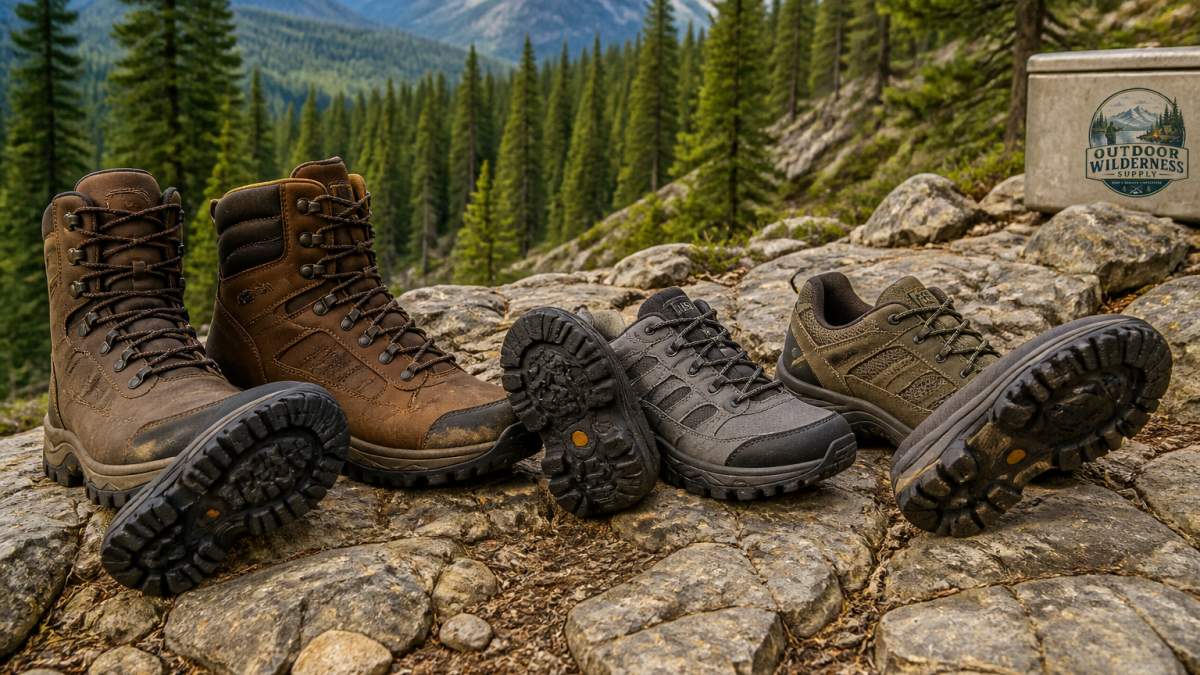
Botas Pro Metallic 6 Inch Waterproof Hiking Boots with VIBRAM® Traction Lug Outsole ($99.99) represents excellent value for serious hikers. These boots feature genuine suede leather that develops character over time while maintaining durability. The VIBRAM® Traction Lug outsole delivers reliable grip on rocky terrain. The H2O-Tex waterproof membrane keeps your feet dry in rain and stream crossings. Memory foam footbed provides cushioning that doesn't compress out after a few weeks. Ankle protection and cement construction ensure these boots handle technical terrain and rough use.
What works: The VIBRAM® outsole is genuinely excellent for the price. Ankle protection is substantial without being restrictive.
What doesn't: Heavier than shoes for day hikes. The break-in period is typical for boots, expect 2-3 weeks before they feel completely comfortable.
Botas Pro Blue 4 Inch Waterproof Outdoor Shoes ($69.99) and Botas Pro White 4 Inch Waterproof Outdoor Shoes ($69.99) offer lightweight footwear for hikers who prioritize agility and speed. The upgraded microfiber upper is 30% lighter than traditional hiking shoes while resisting scratches, stains, and abrasions, a real advantage on long day hikes where weight accumulates. The VIBRAM® outsole matches the boot version, delivering traction. H2O-Tex waterproofing handles wet conditions. Anti-fatigue foam insole reduces foot fatigue on sustained hikes.

These shoes excel for hikers carrying light packs on established trails. The microfiber upper resists scratches and stains better than canvas alternatives.
The tradeoff: Minimal ankle support means they're unsuitable for heavy loads or technical scrambling.
Winter Womens Mens Boots ($65.99) serve hikers who need versatility across seasons.
These boots work equally well for city walking and trail use, which matters if you want one pair that transitions between contexts.
The limitation: These aren't specialized hiking boots, so they lack some features of dedicated footwear for hikers. The outsole is functional.
CALTO H75470 Hiking Style Boots ($98.00) appeal to hikers seeking a distinctive aesthetic. The elevated insole provides elevation while maintaining comfort.
These boots stand out for hikers who value style alongside function. The synthetic upper is lightweight and easy to maintain.
The reality: These are hiking-style boots rather than purpose-built hiking boots.
Start by honestly assessing your typical hikes: distance, terrain difficulty, pack weight, and how often you hike.
Frequently Asked Questions
What kind of shoes should hikers wear?
Hikers should wear footwear designed for uneven terrain with good traction, ankle support, and cushioning. Choose between hiking boots for technical terrain and pack weight, or hiking shoes for day hikes and lighter loads. Look for features like VIBRAM® outsoles for grip, waterproof membranes to stay dry, and memory foam insoles for comfort. The Botas Pro Metallic 6 Inch Waterproof Hiking Boots ($99.99) offer suede leather and ankle protection, while the Botas Pro Blue 4 Inch Waterproof Outdoor Shoes ($69.99) provide a lighter alternative with anti-fatigue technology.
How should hiking shoes fit to prevent blisters and foot fatigue?
Hiking shoes should fit snugly around the heel and midfoot with a thumb's width of space at the toe box. Your heel should not slip when walking downhill, and the toe box should allow your toes to wiggle without pressure. Wear the socks you plan to hike in when trying on footwear. Break in your shoes on short trails before longer trips. A proper fit reduces foot fatigue and prevents blisters during extended hikes. Wide options like the Botas Pro Blue 4 Inch (D wide) accommodate different foot shapes.
Are waterproof hiking shoes worth the investment?
Waterproof hiking shoes are worth it if you hike in wet conditions, cross streams, or encounter rain regularly. They keep your feet dry and warm, reducing the risk of blisters and hypothermia. However, waterproof footwear can be heavier and less breathable than non-waterproof options. For dry-season day hikes, standard hiking shoes may suffice. For thru-hiking, backpacking, and technical terrain, waterproof protection pays off. Models like the Botas Pro Metallic with H2O-Tex Waterproof Membrane ($99.99) provide reliable protection.
How long do hiking shoes typically last before needing replacement?
Durability depends on terrain, weight, and care. Rocky, technical terrain wears outsoles faster than smooth trails. Lighter hikers experience longer boot life than heavier hikers. Regular cleaning, proper drying, and rotating between pairs extends lifespan. Signs of replacement include worn tread, compressed midsoles, and heel slippage. Botas Pro shoes feature upgraded micro-fiber uppers that resist scratches and abrasions while maintaining durability.
What's the difference between hiking shoes and trail-running shoes?
Hiking shoes offer more ankle support, cushioning, and protection for uneven terrain and heavy packs. Trail-running shoes prioritize speed and agility with minimal support and lighter weight. Hiking footwear features stiffer midsoles and rock protection plates; trail shoes have flexible, responsive soles. Hiking shoes work for technical terrain and long distances; trail shoes suit faster movement on established paths. For most hikers carrying gear, dedicated hiking footwear provides better stability and protection than trail-running shoes.
