

Practical Survival Kits for Budget Preppers: 2026 Guide
Table of Contents
- Quick Comparison: Practical Survival Kits for Budget Preppers
- How to Build a 72-Hour Kit on a Budget
- DIY Emergency Survival Kit Checklist
- Affordable Emergency Food Storage Tips
- Water Filtration and Storage on a Budget
- Second-hand and Surplus Sourcing for Survival Kits
- Skill-to-Gear Ratio: Why Skills Stretch Every Dollar
- Frequently Asked Questions
Last Updated: September 30, 2026
Quick Comparison: Practical Survival Kits for Budget Preppers
Practical survival kits for budget preppers are collections of essential tools, shelter, water treatment, and food assembled at low cost, often by combining a few pre-built kits with second-hand finds.
A 72-hour kit should keep you fed, hydrated, warm, and able to signal for help for three days. That is the standard most emergency management agencies build around, and it is the right target for a household starting from zero.
Below, we break down how to build that kit without overspending, which items to buy new, which to source used, and where skills replace gear entirely.
| Approach | Typical Cost | Time to Assemble | Best For |
|---|---|---|---|
| Pre-packaged kit only | Higher upfront | None | Renters, last-minute buyers |
| DIY from scratch | Lowest | Several weekends | Patient, hands-on preppers |
| Hybrid (kit + DIY top-ups) | Middle | A weekend or two | Most households |
| Second-hand and surplus | Lowest to middle | Ongoing | Thrifters, military surplus shoppers |
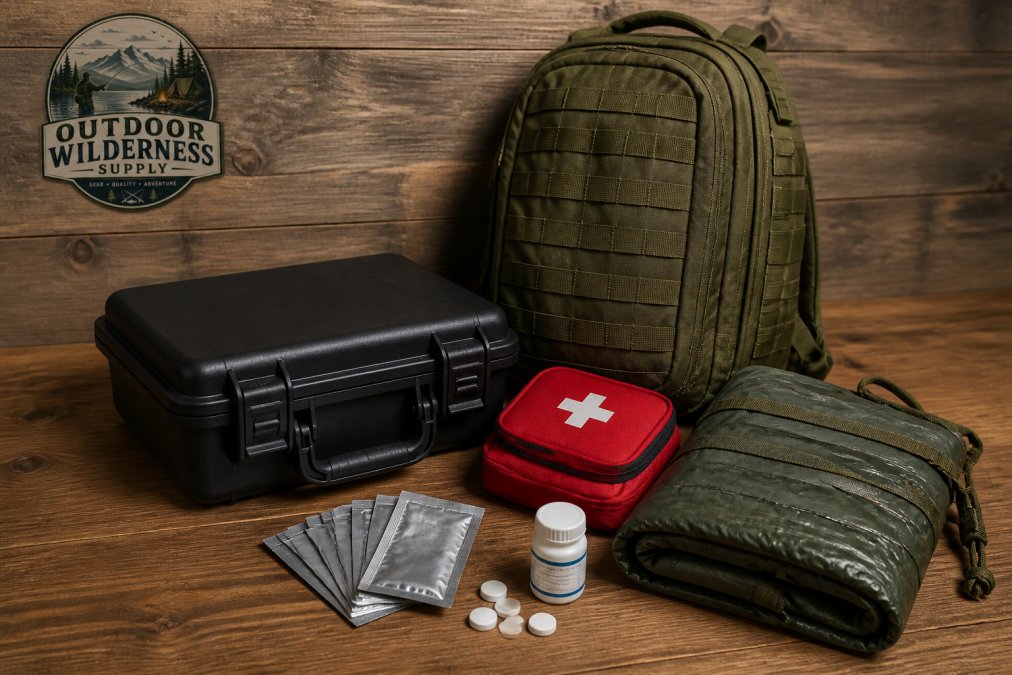
How to Build a 72-Hour Kit on a Budget
The cheapest path to a working 72-hour kit is a hybrid: buy one solid pre-built kit, then fill the gaps yourself with dollar-store and surplus items. A 72-hour kit is a portable supply of water, food, shelter, first aid, and signaling tools sized for three days of self-reliance.
Start with the categories, not the products. Water, food, shelter, warmth, light, first aid, and communication.
DIY vs. Pre-Packaged Cost Analysis
DIY kits cost less in cash but more in time. Pre-packaged kits cost more but arrive complete and correctly packed. The trade-off is real, and it is not always about money.
DIY Emergency Survival Kit Checklist
A DIY emergency survival kit checklist should cover water, food, shelter, warmth, light, first aid, and communication, with a few comfort items added for morale. Print this and check items off as you acquire them.
- Water: one gallon per person per day, plus purification tablets or a filter
- Food: shelf-stable bars, canned goods, or freeze-dried meals for three days
- Shelter: emergency blanket, tarp, or lightweight bivy
- Warmth: extra layers, hand warmers, fire-starting tools
- Light: flashlight or headlamp, plus spare batteries
- First aid: bandages, gauze, antiseptic, any personal medication
- Communication: whistle, backup phone charger, written contact list
- Multi-tool or knife
- Duct tape and paracord
- Copies of IDs and insurance documents in a waterproof bag
Affordable Emergency Food Storage Tips
Affordable emergency food storage comes down to buying shelf-stable staples in bulk, rotating them before they expire, and storing them where heat and moisture cannot reach them. You do not need a dedicated pantry to do this well.
- Store food in airtight containers, not original packaging
- Keep the stash in a cool, dark, dry spot away from concrete floors
- Label everything with the purchase date
- Rotate oldest items into daily meals and replace them
- Prioritize calorie-dense foods: nut butters, oats, canned proteins, energy bars
- Add a manual can opener; it is the most forgotten item in every food kit
Water Filtration and Storage on a Budget
| Method | Upfront Cost | Space Needed | Best For |
|---|---|---|---|
| Bottled water | Low per unit | High | Short-term, at home |
| Purification tablets | Very low | Minimal | Backpack kits |
| Gravity filter | Moderate | Moderate | Basecamp, long-term |
| Purification bottle | Moderate | Minimal | One-person kits |
The WSK Elite 72-Hour Emergency Evacuation Survival Rolling Bag takes a different approach by bundling twelve water pouches, ten purification tablets, a one-liter hydration bag with straw, and a portable stove into one rolling kit. It is built for evacuation scenarios where you may need to move on foot or by vehicle with everything already packed.

Second-hand and Surplus Sourcing for Survival Kits
Military surplus stores, estate sales, and gear swaps are where budget preppers stretch the most dollars. Surplus gear was built to a durability standard, not a marketing one, and it often outlasts new retail equivalents at a fraction of the cost.
Where to actually source used gear:
VOTAGOO® Emergency Survival Gear Kits →
- Military surplus stores. The best single channel for packs, wool blankets, canteens, metal cookware, and load-bearing gear. Stock rotates, so visit regularly rather than once.
- Estate sales and garage sales. Where you find wool blankets, hand tools, cast iron, and older camping gear at estate-clearance prices. Go early on the first day for the good items.
- Gear swaps and consignment outdoor shops. Where lightly used modern camping gear shows up, sometimes at half of retail or less.
- Online resale marketplaces. Useful for specific items, but you cannot inspect before buying, so limit this channel to low-risk categories.
- Thrift stores. Inconsistent, but worth a weekly pass for wool layers, metal utensils, and small containers.
What to buy used without hesitation:
- Wool blankets and cold-weather layers, wool holds up for decades and is easy to inspect for moth damage
- Metal cookware and canteens, no moving parts, no shelf life, easy to clean and re-season
- Packs and load-bearing gear with intact stitching, check every seam, strap, and buckle before buying
- Tools with no moving parts: hatchets, shovels, knives, a used hatchet in good condition outperforms a new budget one
- Storage containers and ammo cans, metal cans make excellent waterproof storage for fire-starting supplies and documents
What to buy new:
- Water purification tablets and filters, expiry dates matter and cannot be verified on used stock
- Food and anything edible, no exceptions
- First aid supplies, sterile means sterile
- Batteries and anything with a shelf life
- Anything that touches your mouth, eyes, or open wounds
The five-minute inspection that saves regret:
- Rust. Surface rust on cast iron or carbon steel is usually fixable. Pitting and deep corrosion are not.
- Dry rot in fabric. Pinch the fabric and pull gently. If it tears or crumbles, walk away, this is common in older canvas and nylon.
- Cracked plastic. Check buckles, clips, and container lids. Plastic embrittles with age and UV exposure.
- Stitching. Look at every seam on packs and pouches. Loose or frayed stitching means the load rating is gone.
- Smell. Mildew and mold in fabric or foam are hard to fully remove and will spread to the rest of your kit.
Why this channel matters more than it looks:
Skill-to-Gear Ratio: Why Skills Stretch Every Dollar
Three skills worth more than any single purchase:
- Fire-starting. Learn to build a fire in wet conditions using a flint striker and natural tinder. Practice monthly until it is automatic.
- Water procurement. Learn to identify safe water sources and treat water by boiling, filtering, and chemical means.
- Shelter building. Learn to construct a windbreak and overhead cover from a tarp, paracord, and natural materials.
Gear maintenance matters just as much. Store your kit somewhere you can reach it, check batteries twice a year, and replace anything that has degraded. An inventory list taped inside the lid saves you from discovering a missing item during an actual emergency.
Frequently Asked Questions
How do I start emergency prepping on a limited budget?
Start with the essentials you will actually use: water, food, shelter, and first aid. Set a small monthly budget, like $20-$30, and buy one category at a time. Build a 72-hour kit first, then expand. Use the DIY emergency survival kit checklist to avoid buying duplicates. Prioritize water purification and a reliable fire starter before tactical gear, since those cover the most likely emergencies.
Are DIY survival kits better than pre-packaged options for budget preppers?
It depends on your time and skills. Pre-packaged kits like the VOTAGOO 60-in-1 or the WSK 72-Hour Hurricane Kit save research time and ensure nothing is missed, but cost more upfront. DIY kits let you buy exactly what you need and often cost less, but require more planning. For most budget preppers, a hybrid approach works best: buy a core kit, then add items you already own or find on sale.
What are the most cost-effective ways to store emergency food and water?
Buy shelf-stable staples in bulk: rice, beans, oats, and canned goods. Store them in airtight containers in a cool, dark place. For water, use food-grade containers and rotate every six months. Water purification tablets are inexpensive and lightweight. The WSK kits include 5-year shelf-life food bars and water pouches, which are a good benchmark for long-term storage without refrigeration.
What gear should be in a 72-hour emergency bag?
A 72-hour kit should cover water, food, shelter, warmth, first aid, and communication. Include at least one liter of water per person per day, non-perishable food, an emergency sleeping bag, a tarp, a multi-tool, a flashlight, and a whistle. The WSK Elite 72-Hour Rolling Bag includes these categories plus hygiene items. If building your own, use the DIY checklist and test your bag weight before an emergency.
How do I prioritize survival gear purchases when money is tight?
Focus on gear that addresses multiple needs. A multi-tool replaces several single-purpose tools. A waterproof backpack protects everything you carry. Buy used or surplus items for non-critical gear like pots, utensils, and clothing. Spend full price on items where failure is dangerous: water purification, fire starters, and first aid supplies. The VOTAGOO 60-in-1 kit offers a low-cost starting point for core tools.