

Reliable Fishing Tackle for Lake Fishing: 2026 Guide
Table of Contents
- What Makes Lake Fishing Tackle Reliable
- Quick Comparison: Reliable Lake Fishing Tackle
- Best Fishing Rod and Reel Combo for Lakes
- How to Choose Fishing Line Weight
- Essential Freshwater Fishing Lures
- Terminal Tackle and Hooks That Hold Up
- Maintenance and Troubleshooting for Longevity
- Frequently Asked Questions
Last Updated: September 17, 2026
What Makes Lake Fishing Tackle Reliable
Reliable fishing tackle for lake fishing keeps working after repeated casts, snags, and hard-fighting fish. Reliability comes down to three things: material quality, build construction, and how well the gear matches the water you actually fish.
Outdoor Wilderness Supply is a veteran owned business.
Quick Comparison: Reliable Lake Fishing Tackle
The table below lines up dependable lake setups by use case, so you can match gear to how you actually fish.
| Setup | Best For | Key Reliability Feature | Price |
|---|---|---|---|
| Fishing for Fun Spinning Combo | Beginners, families, bank fishing | Pre-spooled 20 lb mono, 8+1 stainless guides | $119.00 |
| Tournament Series Casting Rod | Catfish, heavy cover | S-Glass/E-Glass/carbon blend, stainless guides | $79.00 |
| 600STS Spinning Reel | Bait fishing, live bait | 22 lb drag, brass gears, live liner system | $89.00 |
| LUNKERBAG Tackle Storage System | Organizing a full day's gear | Rip-stop polyester, TPU corrosion-resistant zippers | $59.95 |
| Complete Catfish Hook Box | Multi-species catfishing | Sizes 6/0 through 12/0, three hook styles | $44.99 |
Best Fishing Rod and Reel Combo for Lakes
The best fishing rod and reel combo for lakes balances power, casting distance, and drag capacity against the species you're chasing. For most lake anglers, a medium-heavy spinning combo covers the widest range.

Spinning vs Baitcasting for Lakes
Spinning reels win for versatility and ease of use; baitcasters win for accuracy and pulling power. For lakes, spinning gear handles lighter lures, casts into wind more forgivingly, and takes less practice. Baitcasters shine for heavier baits at catfish or tight cover where precise placement matters.
How to Choose Fishing Line Weight
Choose line weight by matching it to your rod's printed rating and the size of fish you expect, not by going as heavy as possible. Heavier line reduces casting distance, loads the rod tip poorly, and can overwhelm light guides. On lakes, the right answer often changes with the spot.
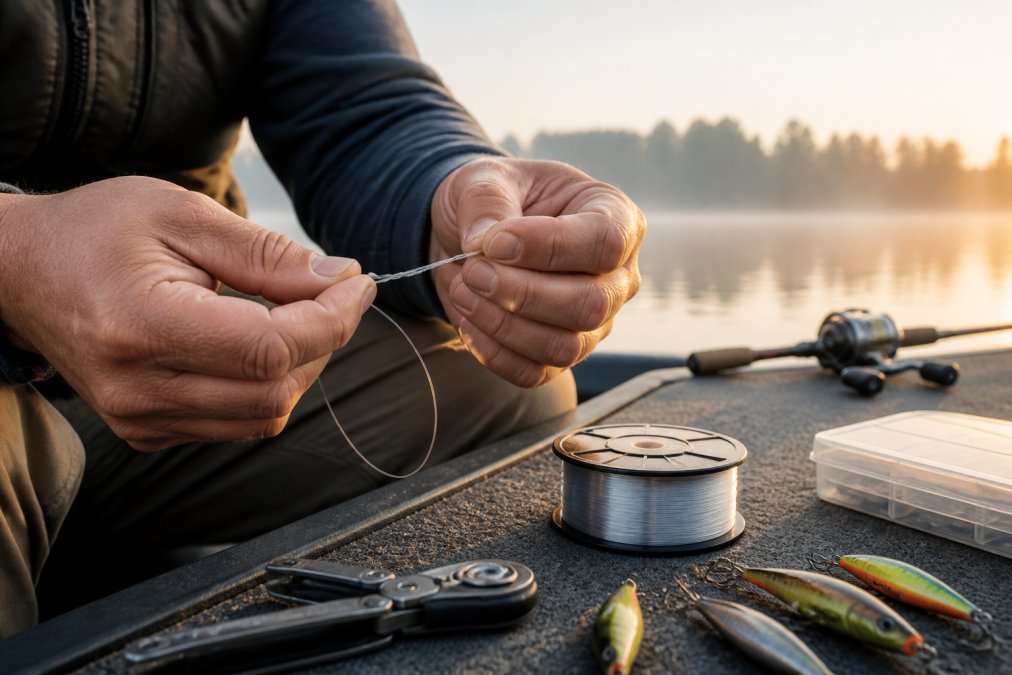
Three practical rules:
- Match line weight to drag capacity, so line breaks before your reel does
- Go lighter in clear water, heavier around cover and structure
- Replace line at the start of each season, since UV and abrasion degrade it
Mono, Fluoro, or Braid
Monofilament stretches, floats, and costs the least. It's the most forgiving choice for beginners and the standard for bait fishing, since its stretch absorbs the surge of a head-shaking fish.
Line Diameter, Spool Capacity, and Lake Depth
Line weight is only half the story. Diameter determines how much line fits on your spool, and spool capacity determines how far a running fish can go.
When to Retire Line
Line is a consumable. Replace monofilament and fluorocarbon at least once per season, more often if you fish abrasive cover or leave gear in a hot vehicle. Braid lasts longer but should be inspected for fraying and cut back when the last section feels rough.
Essential Freshwater Fishing Lures
A well-rounded lure box covers moving water and heavy cover alike. Soft plastic worms, crankbaits, spinnerbaits, and jigs each fill a different role at the lake. The Freedom Baitz Soft Plastic Baits line brings several of these presentations into one lineup: worms for finesse fishing in open water, thicker creature-style bodies for punching through heavy cover, and a range of colors and sizes to match changing water clarity and light. Having that variety in one line means fewer gaps in the box and less guessing when conditions change mid-trip. It's worth a look in the store for anglers who want dependable soft plastics without piecing together several different brands.
Terminal tackle ties the presentation together. Bullet weights and water drop sinkers control depth on soft plastics, while swivels reduce line twist on spinnerbaits. The JSM 160-Piece Fishing Accessories Kit covers hooks, sinkers, swivels, snaps, and beads in one box.
Terminal Tackle and Hooks That Hold Up
Hooks fail two ways: they bend out under load, or they rust and lose their point. High-carbon steel with a chemically sharpened point and a corrosion-resistant finish solves both.
LUNKERBAG Tackle Storage System →
Maintenance and Troubleshooting for Longevity
Gear that gets maintained outlasts gear that gets replaced. Most tackle failures trace back to three preventable causes: corrosion, dried lubricant, and abrasion. Reliability over multiple seasons comes down to what you do after the trip, not what you bought before it.
The Post-Trip Routine
After every trip, wipe rods with a damp cloth and dry them fully before storage, paying attention to guide rings and reel seats where lake water leaves mineral film that abrades line. Back off your reel's drag before putting it away, since compressed drag washers take a set. Add a drop of reel oil to the handle knob and level wind, never to the drag stack, where oil attracts grit and causes inconsistent pressure.
Seasonal Maintenance Calendar
A simple schedule keeps gear reliable:
- After every trip: Wipe rods, dry reels, back off drag, inspect the last few feet of line.
- Monthly during season: Add a drop of reel oil to handle knob and level wind. Check guide rings for cracks or grooves.
- End of season: Strip line from reels, clean and re-grease bearings and gears, inspect drag washers, and store reels with drag backed off.
- Start of season: Spool fresh line, re-tie leaders, check hook points, and test drag smoothness before the first cast.
Reels serviced at the end of the season come out of storage smoother than reels serviced in spring, because old grease and moisture don't sit against metal for months.
On-Water Troubleshooting
When something fails on the lake, diagnose fast and keep fishing.
- Reel feels gritty: Sand or dried grease in the bearings. Clean and re-lubricate. If it happens mid-trip, a drop of oil on the handle knob and level wind can get you through the day.
- Line fraying near the guide: A cracked or grooved guide ring. Replace the guide. In the field, cut back past the fray and re-tie, then avoid that guide if possible.
- Drag slipping under load: Worn drag washers or a loose drag knob. Tighten, then inspect washers. If the drag is jerky rather than slipping, the washers may be contaminated with oil.
- Hooks rusting in the box: Moisture trapped in storage. Add a desiccant pack and dry hooks before storing.
- Rod tip broken: A spare tip-top guide and a lighter can get you back fishing in minutes. Carry a repair kit with tip-tops, thread, and epoxy.
- Bail not closing: Usually a bent bail wire or a weak bail spring. A spare bail spring is a small, cheap part that saves a trip.
Storage That Protects
Storage matters more than most anglers think. The LUNKERBAG Tackle Storage System uses heavy-duty rip-stop polyester with an abrasion-resistant, no-slip bottom and TPU corrosion-resistant zippers and fasteners, resisting the moisture that ruins cheaper bags. The front-loading compartment holds two to three MONSTERBOX 3700 trays, keeping hooks, weights, and lures organized and dry.

Budget-Conscious Reliability
Reliability does not require premium pricing. A few habits stretch a modest kit further than a bigger budget spent carelessly:
- Buy one good reel instead of three cheap ones. A reel with brass gears and a sealed drag outlasts two or three entry-level reels.
- Replace line, not reels. Most "bad reel" complaints are worn line or contaminated drag washers.
- Carry spare terminal tackle. A missing hook or swivel ends a trip faster than a broken rod.
- Store gear dry. Corrosion is the single biggest killer of budget tackle.
Frequently Asked Questions
What is the best tackle for lake fishing?
The best lake fishing tackle depends on your target species. For bass and panfish, a medium-power spinning rod with 8-12 lb line and soft plastics works well. For catfish, a medium-heavy rod with 20 lb monofilament and circle hooks is more reliable. Focus on matching rod power, line weight, and hook size to the fish you're after, and choose gear built with corrosion-resistant components for long-term dependability.
What gear do I need for lake fishing?
A reliable lake fishing setup includes a rod and reel combo, fresh line, an assortment of lures and hooks, terminal tackle like swivels and weights, and a tackle storage system to keep everything organized. A landing net helps with catch-and-release. Start with a medium-power spinning combo, add soft plastics and crankbaits, and carry extra hooks and weights so you can adapt to changing conditions.
How do you choose the right fishing line for freshwater lakes?
Match line type and weight to water clarity and cover. Monofilament is forgiving and budget-friendly, fluorocarbon is less visible in clear water, and braided line offers strength for heavy cover. For most lake fishing, 8-12 lb mono or fluoro works for bass and panfish, while 20 lb or heavier suits catfish. Check your drag setting and knot strength before casting.
What are the essential lures for catching bass in lakes?
Soft plastic worms, crankbaits, spinnerbaits, jigs, and topwater plugs cover most lake bass situations. Soft plastics rigged Texas-style work in cover, crankbaits cover open water, and spinnerbaits handle stained water. Carry a few colors and sizes in each category so you can match the forage. Retrieve speed and depth control matter as much as lure choice.
How do I know if my fishing tackle is reliable?
Reliability comes down to materials and construction. Look for stainless steel guides, corrosion-resistant zippers, high-carbon steel hooks, and reinforced stitching on bags. Gear that holds up season after season uses quality components and is designed for the conditions you fish. Maintenance like rinsing reels and checking line for abrasion extends the life of any setup.