

Best Camping Supply Store Alternatives for 2026
Table of Contents
- Why Campers Are Looking Beyond Big-Box Retailers
- How to Compare Camping Supply Store Alternatives
- Online Outdoor Gear Stores: What to Expect
- Finding Affordable Camping Gear Without Sacrificing Quality
- When Local Outdoor Gear Stores Make Sense
- A Practical Camping Gear Buying Guide for 2026
- Specialty Camping Supply Stores: What They Offer That Others Don't
- Conclusion
- Frequently Asked Questions
Last Updated: October 12, 2026
Why Campers Are Looking Beyond Big-Box Retailers
The best camping supply store alternatives give you deeper selection, better buying terms, and staff who actually camp. At Outdoor Wilderness Supply, we hear the same complaint from customers: the big-box camping supply store carries everything, but specializes in nothing. You walk past aisles of patio furniture to reach a thin wall of tents, and nobody on staff can tell you which stove survives a windy ridge.
That gap is why so many campers now split their shopping. The big-box store handles the impulse buy; a specialist handles the gear your trip depends on. This guide breaks down your real alternatives, what each one costs you in money and risk, and how to choose without wasting a season on the wrong purchase.
How to Compare Camping Supply Store Alternatives
Comparing camping supply store alternatives comes down to two things: how deep the selection runs and what happens if the gear fails. Get those two right and the rest of the decision usually makes itself.
Selection Depth and Specialization
A general retailer stocks what sells to everyone. A specialist stocks what works in specific conditions. If you need a stove that performs in wind and cold, a general shelf gives you three options; a specialist gives you the one built for it. Depth matters most for tents, sleeping bags, stoves, and footwear, the four categories where a wrong pick ruins the trip.
Return Policies and Buying Risks
Return terms are where cheap gear gets expensive. Before you buy anywhere, confirm the return window, who pays return shipping, and whether used or opened items qualify. A lower sticker price with a 14-day window and buyer-paid shipping can cost more than a higher-priced item you can actually return.
| Retailer Type | Selection Depth | Typical Return Risk | Best For |
|---|---|---|---|
| Big-box store | Broad, shallow | Easy returns, limited expertise | One-off basics |
| Online outdoor gear store | Deep by category | Varies; check shipping terms | Specific gear needs |
| Local outdoor gear store | Curated, expert-led | Often flexible in person | Fit and advice |
| Specialty camping supply store | Deep and technical | Depends on policy | Serious trips |
| Secondhand market | Unpredictable | Usually final sale | Budget builds |
Online Outdoor Gear Stores: What to Expect
Online outdoor gear stores win on selection and lose on certainty. You can find a stove, a tent, and a sleeping system built for the exact conditions you camp in, which no single physical store can match. What you give up is the ability to hold the item first.
That trade-off is manageable if you shop smart. Read the specs, not the marketing copy. Check the material, the packed weight and dimensions, and the return window before checkout. The Federal Trade Commission's online shopping guidance covers your rights on delivery and returns, and it's worth knowing before a big order.
Our advice: buy technical gear online where the spec sheet is detailed, and buy fit-dependent gear in person where you can try it.
Finding Affordable Camping Gear Without Sacrificing Quality
Affordable camping gear is about buying once, not buying cheap. The cheapest tent often costs more over three seasons than a mid-priced one that survives them. The way to save real money is to understand why gear costs what it does, then decide where to spend and where to cut.
Where the Money Actually Goes
Four things drive the price of any piece of camping gear: materials, construction, weight, and warranty support. A tent gets expensive when it uses higher-denier fabrics, taped seams instead of stitched ones, aluminum poles instead of fiberglass, and a warranty the maker will actually honor. You can save on any of those, but you need to know which one you're giving up.
- Materials: Higher-denier nylon and ripstop resist abrasion; lighter fabrics save pack weight but wear faster.
- Construction: Taped and seam-sealed beats stitched-only in sustained rain. Aluminum poles outlast fiberglass in cold.
- Weight: Ultralight gear costs more per ounce saved. If you're car camping, skip the premium.
- Warranty: A written warranty is worth more than a lower sticker price on gear you'll use hard.
Match the Strategy to the Shopper
Budget advice only works if it fits how you actually camp. Here's how we'd segment it:
| Shopper Type | Where to Spend | Where to Save |
|---|---|---|
| Beginner / occasional | Shelter and sleep system | Cookware, accessories, storage |
| Family car camper | Tent size and durability | Ultralight anything |
| Technical backpacker | Weight and materials | Camp furniture, bulk cookware |
| Budget builder | Used shelter in good condition | New accessories |
Concrete Ways to Cut Cost Without Cutting Quality
- Buy last season's model, not last decade's design, the engineering is current, the price isn't.
- Prioritize the categories that keep you alive and dry: shelter, sleep system, stove.
- Save on accessories, cookware, and storage where quality matters less.
- Check open-box and refurbished listings directly from the seller, where the warranty usually still applies.
- Wait for end-of-season markdowns on tents and bags, when retailers clear inventory.
- Buy used where condition is verifiable; buy new where it isn't.
Used and secondhand gear fits here too. A used stove or cookset is a low-risk buy if it's mechanically sound, metal doesn't fatigue the way fabric does. A used sleeping bag is a harder call, since insulation loses loft over time and you can't easily verify how it was stored. A used tent is a middle case: check the seams, the pole ferrules, and whether the footprint is included.
Gear Longevity Is the Real Discount
The cheapest gear is the gear you don't replace. A stove you can rebuild, a tent you can re-seam, and a pack with replaceable buckles all cost less per year than a disposable alternative, even if the sticker price is higher. Before you buy, ask whether the item can be repaired, whether replacement parts exist, and whether the maker supports the product after the sale. That question separates a bargain from a mistake.
When Local Outdoor Gear Stores Make Sense
Local outdoor gear stores make sense when fit, advice, or speed matters more than price. Boots, packs, and anything you'll wear for hours need to be tried on, and a local shop lets you do that before you commit. But the real value of a local store isn't just the shelf, it's the services behind it, and most buying guides skip that comparison entirely.
In-Person Services Worth Paying For
A local shop can offer things an online cart can't:
- Fitting help: Boot and pack fitting by staff who understand load transfer and foot volume, not just sizing charts.
- Product demonstrations: Stoves lit, filters primed, tents pitched, you see how the gear actually works before you buy.
- Repairs and maintenance: Seam sealing, pole replacement, stove servicing, and boot resoling keep gear in service instead of in a landfill.
- Rentals: Try a tent, pack, or sleeping system on a real trip before committing to the purchase.
- Local inventory: Same-day availability for the trip you're leaving on tomorrow.
The Trade-Offs You Should Expect
Local shops can't stock every model, and they rarely match online discounts. That's not a flaw, it's the cost of curation and service. What you get in return is advice from someone who has used the gear, a place to bring it back when something fails, and a purchase that supports a business in your community. What you give up is the widest possible selection and the deepest price cuts.
How to Decide
Use local shops for fit-dependent purchases, emergency replacements, and anything you want to demo or rent first. Use online and specialty retailers for planned buys where you've already done the research and know exactly what you want. The two aren't competitors, they're different tools for different purchases, and the smartest shoppers use both.
If you can't try it on, rent it, or get it repaired nearby, buy it online. If you can, buy it local, the service is part of the price.
A Practical Camping Gear Buying Guide for 2026
This camping gear buying guide is built around one rule: match the retailer to the purchase, not the other way around. Use the checklist below before you buy anywhere.
- Confirm the return window and who pays return shipping
- Check the packed weight and dimensions, not just the open size
- Verify the material and build for your conditions
- Read the spec sheet, not the marketing copy
- Compare the total cost, including shipping and returns
- Check whether the item is in stock or backordered
- Confirm the warranty terms in writing
Run that list against any retailer and the weak options fall away fast. The stores that survive it are the ones worth your money.
Specialty Camping Supply Stores: What They Offer That Others Don't
Specialty camping supply stores offer technical depth, honest advice, and gear built for specific conditions rather than general appeal.
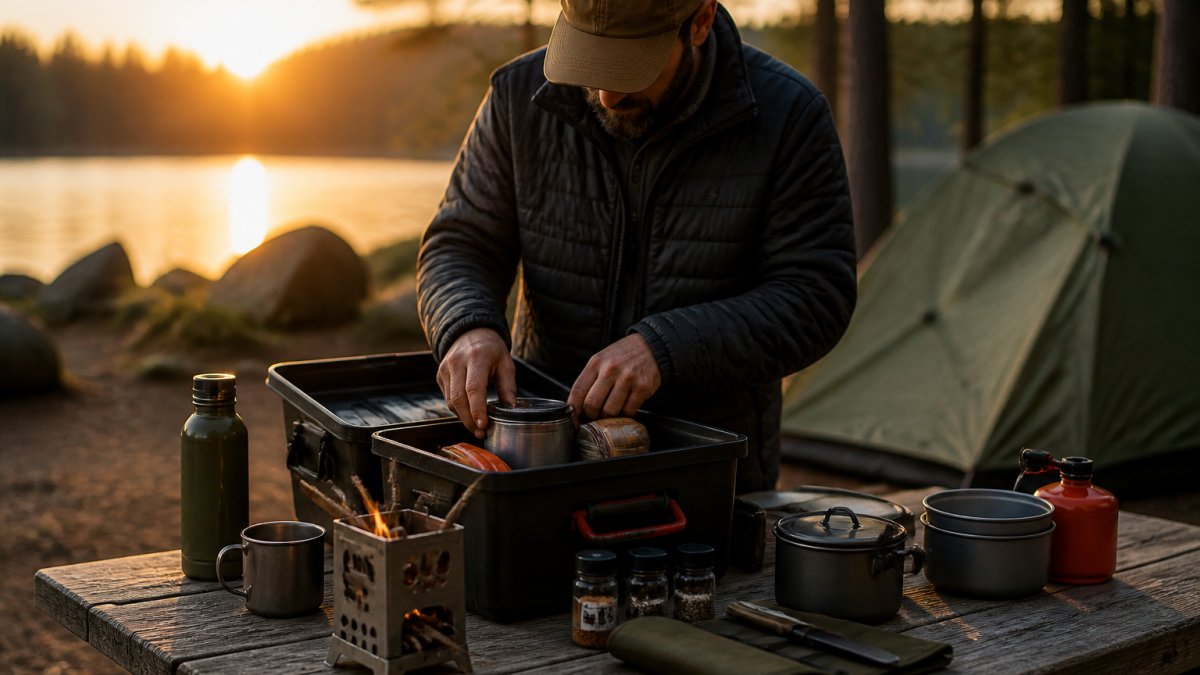
Take camp cooking. The Anchor Stove is built from heavy-duty heat-resistant steel and engineered for consistent airflow, so it holds up in demanding conditions, and the PACKDOWN™ design makes it easy to pack, transport, and store.

That's the difference a specialist makes. We stock gear for the trip you're actually taking, not the one a general retailer assumes you're taking.
Conclusion
Choosing among camping supply store alternatives is really a question of what you're willing to risk. The general retailer is convenient until the gear fails; the specialist is worth it when the trip depends on the purchase. Match the retailer to the item, and you stop paying twice for the same piece of gear.
Outdoor Wilderness Supply stocks the categories where that choice matters most: a curated selection of camping, fishing, and water recreation gear, multi-functional survival tools, and dependable equipment built for wilderness conditions. Browse our camp kitchen and stove collection, or start with the Anchor Stove and the Hiker Twig Stove Package, and gear up for the trip you've actually planned.

Frequently Asked Questions
What should I look for in a camping supply store alternative?
Focus on four things: selection depth for the gear you actually use, return policy terms, whether in-person help is available, and total cost including shipping. A store that carries specialized equipment like portable camp kitchens or backpacking stoves will serve you better than a general retailer. Check whether the store stands behind its products with a no-hassle guarantee, and compare prices on the specific items you need rather than browsing category-wide discounts.
Are online outdoor gear stores better than local shops for camping equipment?
It depends on what you need. Online outdoor gear stores typically carry a wider selection of specialized items and often have lower prices because they skip the overhead of a physical location. Local outdoor gear stores let you handle gear before buying and offer immediate availability for last-minute trips. Many campers use both: buy big-ticket specialty items online where selection is deeper, and pick up consumables or emergency replacements locally.
How do I find affordable camping gear that still holds up?
Look for gear built from durable materials like stainless steel or titanium rather than bargain-bin alternatives. A flat-pack twig stove made from 304 stainless steel costs far less than a full propane system and lasts for years. Prioritize multi-functional items that replace several single-purpose tools. Read the specifications carefully, check material thickness and weight, and favor stores that offer guarantees so you can return something that does not perform.
What camping gear should I buy from a specialty outdoor store instead of a general retailer?
Specialty stores excel at gear where material quality and design details matter most: backpacking stoves, camp kitchen systems, sleeping bags rated for specific temperatures, and survival tools. These items often use proprietary designs or premium materials you will not find at general retailers. For example, a PACKDOWN design stove or a roto-molded camp kitchen box with a lifetime guarantee comes from a specialized source, not a general merchandise aisle.