

The Beginner's Guide to Essential Fishing Gear in 2026
Last Updated: November 4, 2026
Quick Summary
Buy a matched spinning rod-and-reel combo as your core fishing gear, then add monofilament line, hooks, weights, bobbers, and swivels. Choose a rod in the 6'6" to 7' range with medium power, and match your line strength to the rod's rating.
- A spinning combo removes the guesswork of pairing a rod's power with a reel's size.
- Monofilament line is forgiving, inexpensive, and easy to tie for beginners.
- The improved clinch knot is the one knot most beginners should learn first.
- Choose a kid's rod under 6 feet with a closed-face or small spinning reel.
- Replace your line at least once a season, more often if you fish hard.
Table of Contents
- Start With the Rod and Reel: Your Core Fishing Gear
- The Complete Fishing Equipment List for Beginners
- Choosing a Beginner Fishing Kit for Adults
- A Beginner Fishing Kit for Kids That Actually Works
- Bait and Lures: What to Tie On First
- What a Starter Setup Costs and How to Build It
- Your Fishing for Beginners PDF Checklist
- Pick Your First Fishing Kit at Outdoor Wilderness Supply
- Frequently Asked Questions
Start With the Rod and Reel: Your Core Fishing Gear
Getting the essential fishing gear for beginners in 2026 right starts with one decision: buy a matched rod-and-reel combo, not separate pieces. At Outdoor Wilderness Supply, we tell every new angler the same thing, because a combo removes the guesswork of pairing a rod's power with a reel's size. A spinning combo is the standard first purchase for good reason.

A spinning rod and reel combo is a pre-matched rod and reel designed to work together, with the reel hanging below the rod and a line-guide system that lets line peel off freely on the cast. That open design is what makes spinning gear forgiving: fewer tangles, easier casting, and less to unlearn.
Why a Spinning Combo Beats Everything Else for Beginners
Baitcasting reels demand thumb control on every cast. Spinning reels don't. For a beginner angler, that difference decides whether the first trip is fun or frustrating.
Look for a combo with a rod in the 6'6" to 7' range, medium power, and a reel sized to match. Our Sick Stick Spinning Combo pairs a 7'1" medium-heavy rod with a 2000-size reel, cushioned foam grips, and SiC guides.
Best for: one purchase that covers panfish, bass, and light saltwater. Skip if: you already own a rod and only need a reel.
The Complete Fishing Equipment List for Beginners
Here is the full beginner fishing checklist, organized the way you'll actually pack it. For a deeper freshwater-specific list to cross-reference, see our freshwater fishing gear checklist for beginners. Treat the first four groups as required and everything after as comfort.
- Rod and reel combo
- Fishing line, matched to your reel
- Hooks in a few sizes
- Weights, bobbers, and swivels
- Bait and a couple of lures
- Tackle box
- Pliers and line snips
- Polarized sunglasses, sunscreen, water
- A valid fishing license
Line, Hooks, and Terminal Tackle
Monofilament line is the right first line: it's forgiving, inexpensive, and easy to tie. Match line strength to your rod's rating rather than buying the heaviest line on the shelf. Spooling a reel yourself is straightforward: run the line through the rod guides, tie an arbor knot around the spool, and crank while keeping light tension so the line lays evenly. A common pattern is to leave a small gap below the spool lip, overfilling causes wind knots, underfilling costs distance.
Terminal tackle means everything at the end of your line: hooks, swivels, snaps, and sinkers. Hook size should match your bait, not your ambition. A small hook catches more fish than an oversized one. For a basic bobber rig, tie a clinch knot to the hook, pinch a split shot a few inches above it, and clip a bobber above that so the bait hangs at the depth you want. The improved clinch knot is the one knot most beginners should learn first, it holds well in mono and is easy to inspect.
If you'd rather not assemble pieces one at a time, the 188-Pieces: Portable Fishing Accessory Kit with Tackle Box covers hooks, weights, swivels, and beads in one organized case.

Weights, Bobbers, and Basic Tools
Split-shot sinkers and a few clip-on bobbers handle most beginner setups. Add pliers for hook removal and line snips for clean cuts, and you can rig without borrowing anything.
Our CORE Series Fisherman's Pliers cut braid, mono, and fluoro and include a split-ring tip for swapping hooks. The Core Series Line Snips are a compact option for trimming line.
Watch out: dull cutters fray line at the knot, and a frayed knot is the most common reason a hooked fish gets away.
Matching the List to Your Water and Target Fish
A generic checklist only gets you so far, the right terminal tackle depends on where you fish and what you're after. Match your setup to your water and target fish: lighter line and smaller hooks suit ponds and small lakes, heavier line and added weight suit moving rivers, and rinsing gear with fresh water after saltwater trips helps protect it. Match hook size to your bait.
Choosing a Beginner Fishing Kit for Adults
The fastest path into the sport is a pre-built kit. A beginner fishing kit for adults bundles rod, reel, line, and tackle so nothing is missing on trip one. Buy the combo first, then add tackle as you learn what your water demands.
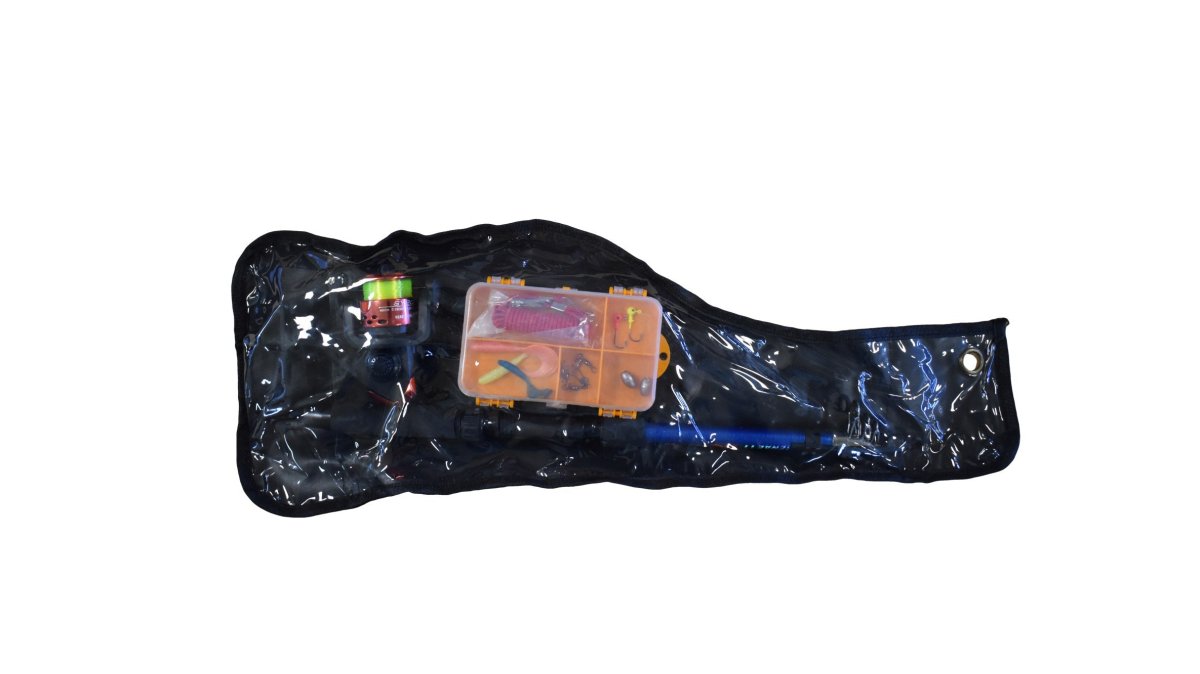
Our Fishing Kit packs hooks, sinkers, swivels, and lures into a durable, waterproof case. It is suited to freshwater and saltwater fishing.

Best for: adults who want one box that covers the basics. Skip if: you already own terminal tackle and only need a rod.
A Beginner Fishing Kit for Kids That Actually Works
A kid's kit should be short, light, and simple. Choose a rod under 6 feet, a closed-face or small spinning reel, and a bobber-and-worm setup that produces bites quickly. Skip complex lures entirely for the first few trips.
The goal is a bent rod, not a perfect cast. Small bluegill and panfish near shore teach more than a full day of casting practice. Keep the kit to one small box so a child can carry it and put it away.
Watch out: an oversized rod tires a child out fast, and fatigue ends the trip before the fish show up.
Bait and Lures: What to Tie On First
Start with live bait and a bobber, then add one or two artificial lures. Worms, minnows, and crickets are the classic confidence baits, and they work because fish eat them year-round. On the artificial side, a simple jig or a small spinner covers most beginner situations.
The rule we give new anglers: fish bait until you can cast accurately and tie a knot without thinking. Lures reward presentation; bait forgives it.
What a Starter Setup Costs and How to Build It
Build the kit in three stages so you spend where it matters. Stage one is rod and reel. Stage two is line and terminal tackle. Stage three is tools and comfort items. The table below shows what each stage includes and why it belongs there, then we'll put realistic dollar ranges against each tier so you can plan a purchase instead of guessing.
| Stage | What to Buy | Why It Comes Here |
|---|---|---|
| 1 | Spinning combo | Everything else depends on it |
| 2 | Line, hooks, weights, bobbers | Makes the rod fishable |
| 3 | Pliers, snips, tackle box | Keeps you rigging on the water |
| Optional | Polarized sunglasses, extra lures | Comfort and versatility |
Low-, Mid-, and Higher-Budget Totals
A realistic beginner setup falls into three broad tiers. Beginner setups can be built at a range of budgets. Start with the items that let you fish, then add better rods, reels, and tools as you learn what your water demands. Check current listings for prices before you buy.
Recurring Costs and Optional Upgrades
Beyond the initial purchase, plan for a few recurring costs. Line should be replaced at least once a season, more often if you fish hard or in abrasive conditions, budget a modest amount for a fresh spool. Hooks, sinkers, and bobbers get lost, so a small restock fund keeps you fishing. A valid fishing license is an annual or multi-year cost set by your state wildlife agency; check its site for current fees and requirements. Optional upgrades worth considering once you're hooked: a second rod for a different technique, a landing net, and a small first-aid kit. Skip trend-driven gadgets until you know what your water demands.
Your Fishing for Beginners PDF Checklist
Print this and keep it in your tackle box. It is the short version of everything above.
- Spinning rod and reel combo
- Monofilament line, matched to the reel
- Hooks in two or three sizes
- Split-shot sinkers and clip-on bobbers
- Swivels and snaps
- Live bait or two starter lures
- Tackle box
- Pliers and line snips
- Polarized sunglasses and sunscreen
- Valid fishing license
Check your state wildlife agency's site for license requirements and current regulations before your first trip. Rules vary by water, and some areas restrict bait type or season.
Pick Your First Fishing Kit at Outdoor Wilderness Supply
The right first kit is the one you'll actually use. Start with a combo, add tackle as you learn, and keep the kit small enough to carry.
Outdoor Wilderness Supply offers a curated selection of fishing gear, including spinning combos, tackle kits, and rigging tools.
Frequently Asked Questions
What should I buy as a beginner fisherman?
Start with four items: a spinning rod and reel combo, a spool of monofilament line in the 8-12 pound-test range, a small tackle box with hooks, sinkers, and swivels, and a pair of pliers. Add polarized sunglasses, sunscreen, and a valid state fishing license before your first trip. Everything else, including lures, a net, and a second rod, can wait until you know what water you fish most.
What is a good fishing kit for beginners?
A good beginner fishing kit pairs a rod and reel with organized terminal tackle so you are not buying pieces separately. Look for a set that includes hooks, sinkers, swivels, and a few lures in a waterproof case, plus a spinning combo in the 6-foot-6 to 7-foot range. Buying these as a bundle gets you on the water faster.
How do I choose a beginner fishing rod and reel?
Choose a spinning combo over a baitcaster for your first setup. Spinning reels are easier to cast, backlash less, and handle light lures well. Match rod length to your setting: a 6-foot-6 rod works for tight shorelines and small creeks, while a 7-foot rod gives more casting distance from a bank or boat. Check the line test and lure weight printed on the rod and keep your line inside that range.
What tackle should a beginner keep in a fishing kit?
Keep it small and organized. Carry hooks in two or three sizes, split-shot sinkers, barrel swivels, a couple of bobbers, and a few soft plastic lures or inline spinners. Add a spare spool of line, line snips, and pliers. A compact tackle box with divided compartments keeps everything findable in low light, and a waterproof case protects gear if you get caught in rain or spray.
Do kids need different fishing gear than adults?
Yes, mostly in size and safety. A shorter rod in the 4-foot-6 to 5-foot-6 range is easier for a child to control, and a closed-face push-button reel is simpler to operate than a spinning reel. Use barbless or single hooks where legal, add a properly fitted life jacket, and keep the kit light so a child can carry it. Adult supervision near water is non-negotiable.
How much does it cost to start fishing?
You can build a functional starter setup at a range of budgets, or spend more on a rod and reel you will keep for years. Budget separately for a state fishing license, which varies by state and resident status. Start modest, fish a few times, then upgrade the piece you use most rather than replacing everything at once.
The hardest part of starting is deciding what to skip. We'd rather you carry ten proven items than thirty you never touch. Browse our fishing collection, compare the combos and kits side by side, and choose options that fit the water you actually fish. Get started with Outdoor Wilderness Supply and build a first kit that earns its place in your pack.
