

How to Spot Greenwashing in Outdoor Gear
Table of Contents
- Why Greenwashing Is Rampant in Outdoor Gear
- Greenwashing Red Flags Checklist for Gear Shoppers
- How to Verify Eco-Friendly Product Claims
- Greenwashing Examples in Outdoor Gear
- Questions to Ask Sustainable Brands Before You Buy
- Outdoor-Specific Certifications and Their Limits
- Durability, Repairability, and Product Lifecycle
- Conclusion
- Frequently Asked Questions
Last Updated: October 17, 2026
Why Greenwashing Is Rampant in Outdoor Gear
Greenwashing in outdoor gear is the practice of making a product look more environmentally friendly than it actually is.
The problem is trust. You cannot smell a jacket's supply chain or see a tent's carbon footprint on a shelf. So brands lean on feeling instead of facts.
That leaves you doing the detective work. This guide from Outdoor Wilderness Supply breaks down how to spot greenwashing in outdoor gear step by step, using the same questions we ask when we evaluate what goes on our shelves.
Greenwashing Red Flags Checklist for Gear Shoppers
A greenwashing red flag is any claim you cannot back up with specific, checkable details. Run every product through this checklist before you buy.
- Does the claim name a specific material, process, or number?
- Is there a third-party certification, or just a brand logo?
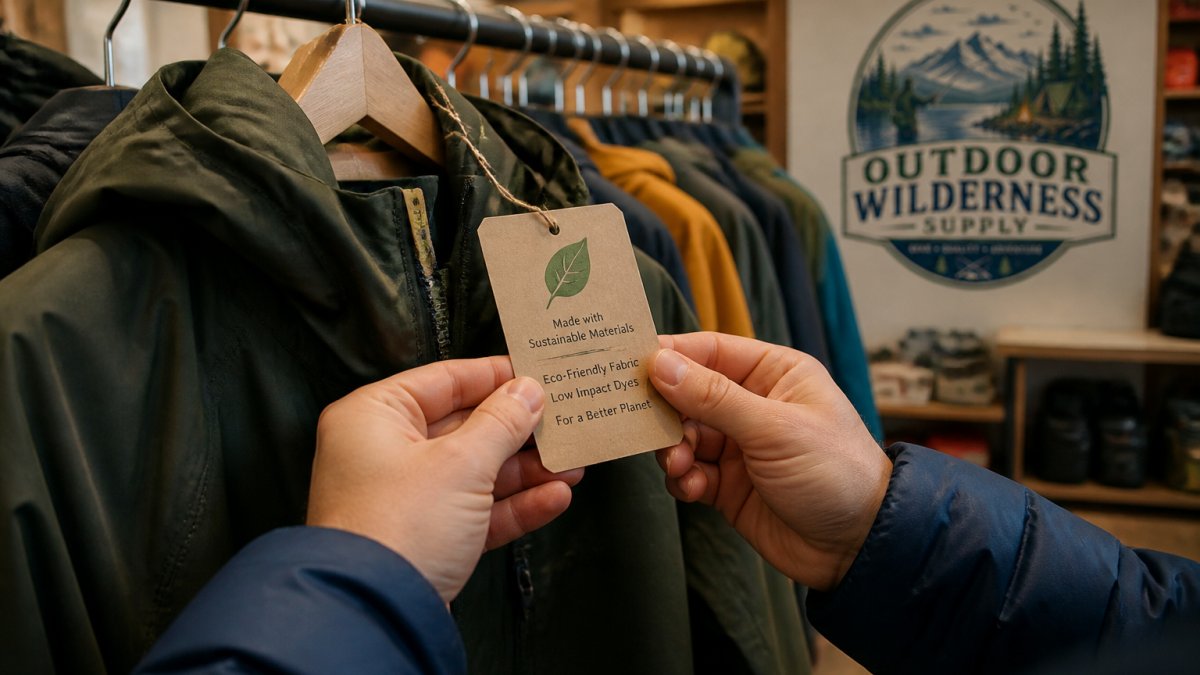
- Does the tag say "eco-friendly" with no explanation?
- Are vague words like "green," "conscious," or "natural" doing the work?
Vague Buzzwords and Unsupported Claims
Words like "eco-friendly," "green," "conscious," and "sustainable" mean almost nothing on their own. They are buzzwords, and they are the most common warning sign.
Ask what the word actually describes. If a jacket is "eco-friendly," is it the fabric? The dye? The packaging? The company's energy use?
Unsubstantiated claims often sound impressive but give you nothing to check. "Made with care for the planet" is a feeling, not a fact.
Misleading Labels and Self-Created Certifications
A brand can invent its own label. A little green leaf icon with a made-up name is not a certification, no matter how official it looks.
Real certifications come from independent groups, not the company selling the product. When you see a label, check who runs it. If the answer is the brand itself, it is not proof of anything.
How to Verify Eco-Friendly Product Claims
Verifying a claim means tracing it from the hangtag back to a specific, checkable source. Generic advice says "look for evidence." The practical version is knowing what evidence looks like for the materials and features that actually appear in outdoor gear. Establishing a rigorous standard for these certifications remains the most reliable way to verify sustainable clothing claims before committing to a purchase.
Trace the claim to product-level data, not brand-level storytelling
A brand's sustainability page is not evidence for a specific jacket. The claim has to attach to the product you are holding.
A useful test: can you point to the exact component the claim describes? "Recycled content" is meaningless until it says which fabric and what percentage. "PFAS-free DWR" is checkable because it names a specific finish on a specific surface.
Match the claim to the material it describes
Outdoor gear is built from a short list of material families, and each one carries its own greenwashing patterns:
- Recycled synthetics (polyester and nylon). "Recycled" usually refers to the shell fabric, not the membrane, zippers, or trim. Ask what percentage is recycled and whether it is pre-consumer or post-consumer content. Recycled polyester still sheds microfibers and is rarely recyclable at end of life, so recycled content is a sourcing improvement, not proof of a low-impact product.
- Down. Look for traceability to the farm and a welfare standard that covers live-plucking and force-feeding. "Responsible down" without a named standard and audit scope is a marketing phrase.
- Wool. "Responsible wool" claims should name the standard and whether it covers land management, animal welfare, and chemical use, or only one of the three.
- Waterproof membranes. A membrane can be made without PFAS and still be petroleum-based and non-recyclable. "PFC-free" describes one chemistry, not the whole footprint.
Check whether the greener version still performs
A sustainability claim on technical gear has to survive contact with the weather. Ask whether the PFC-free jacket still beads water after a season, whether the recycled shell has the same abrasion resistance, and whether the bluesign-approved membrane meets the same hydrostatic head rating. Brands that are serious about this publish the performance specs alongside the environmental ones. Brands that are not publish only the green story and leave you to assume nothing was sacrificed.
Confirm the claim is current and scoped
Environmental claims age. A certification from several years ago may no longer reflect the current supplier or formulation. Check the date on any report or certification and confirm it covers the product version you are buying. The Federal Trade Commission's Green Guides set the expectation that environmental claims be specific, substantiated, and not overstated, a useful standard to hold any hangtag to.
Greenwashing Examples in Outdoor Gear
Greenwashing examples in outdoor gear usually follow a pattern: a brand highlights one good thing and hides the rest. Here is what that looks like in practice.
Picture a "sustainable collection" of jackets. The tag talks about recycled fabric. It says nothing about the waterproof coating, the factory, or the shipping. That is selective disclosure.
Ultralight Dyneema Dry Bag (Roll Top Sack) →
Selective Disclosure and Misleading by Omission
Selective disclosure means showing only the flattering facts. Misleading by omission means leaving out the parts that would change your mind.
A brand might brag about a recycled strap while ignoring the rest of the pack. The single claim is true. The overall picture is not what you were led to believe.
Ask what the brand is not telling you. That question exposes more greenwashing than any label ever will.
Questions to Ask Sustainable Brands Before You Buy
Questions to ask sustainable brands should force a specific answer. Vague questions get vague answers, so make yours sharp.
- What exactly is this product made of, and where?
- Which certification does it carry, and who issued it?
- How long is it built to last, and can it be repaired?
- What happens to it at the end of its life?
- Can you show me the evidence behind this claim?
A brand that respects your question will answer with detail. A brand that dodges is telling you something too.
Outdoor-Specific Certifications and Their Limits
Outdoor certifications are useful, but each one verifies a narrow slice of a product. The mistake shoppers make is treating a logo as a verdict on the whole item. The fix is knowing what each common certification actually covers, and what it leaves out.
What common outdoor certifications verify, and what they do not
- Textile and chemical safety standards (for example, bluesign and OEKO-TEX). These focus on chemical inputs, mill-level processes, and restricted substance lists. They tell you something real about how the fabric was made. They do not verify animal welfare, carbon footprint, durability, or end-of-life recyclability.
- Animal-welfare standards (for example, the Responsible Down Standard and the Responsible Wool Standard). These trace a specific material back to the farm and set welfare criteria. They say nothing about the shell fabric, the membrane chemistry, or the factory that sewed the jacket.
- Climate and carbon claims. A "carbon-neutral product" claim usually relies on purchased offsets rather than eliminated emissions. Offsets can be legitimate, but they do not make a product low-impact, they compensate for emissions that still occurred. Ask whether the claim covers the full lifecycle or only a slice, and whether the brand publishes the methodology.
- Recycled-content certifications. These verify the percentage and chain of custody of recycled material in a specific component. They do not verify that the product is recyclable, repairable, or durable.
- Brand-created labels. A green leaf badge with a made-up name is not a certification. If the issuing organization is the brand itself, the label verifies nothing independent.
How to check certification scope in practice
Scope is the part shoppers skip. A certification can be valid and still not mean what you assume. Check three things:
- Who issued it. Confirm the certifier is independent of the brand. A self-created badge is designed to look official without being one.
- What it covers. Read whether the certification applies to a material, a facility, a process, or the finished product. A mill-level chemical certification does not vouch for the finished jacket's durability or repairability.
- Whether it is current. Certifications expire and suppliers change. Confirm the certification is active and applies to the product version you are buying.
A single certification is a data point, not a conclusion. The U.S. Environmental Protection Agency's guidance on greener products encourages shoppers to consider the full life cycle rather than a single attribute, which is exactly the discipline a certification logo is designed to short-circuit.
Durability, Repairability, and Product Lifecycle
Durability is one of the most honest environmental features a product can have.
Repairability matters just as much. If a zipper or strap can be fixed, the gear stays out of the trash.
Look at the product lifecycle from start to finish. Where do the materials come from? How is it made? How long will it last? What happens when it wears out?
At Outdoor Wilderness Supply, we like gear that earns its keep. Our Ultralight Dyneema Dry Bag is built from durable Dyneema composite fabric with taped seams, so it holds up trip after trip.

Conclusion
Spotting greenwashing takes a little effort, but the habit pays off every time you shop. Ask for specifics, check the certifier, and question any claim that hides the full picture.
If you want gear you can trust to last, Outdoor Wilderness Supply is here to help. We focus on dependable, practical equipment, from multi-functional survival tools to specialized fishing and camping gear.
Frequently Asked Questions
What is greenwashing in outdoor gear?
Greenwashing is when a brand makes environmental claims that sound impressive but lack specific evidence or hide a product's wider impact. In outdoor gear, this often looks like vague buzzwords such as 'eco-friendly' or 'green' on a hangtag without certification, data, or supply chain details. It can also mean promoting a small sustainable collection while the brand's overall production remains unchanged. Spotting it requires checking for third-party verification, specific materials, and transparent disclosure rather than trusting the label.
How can you tell if an outdoor brand is greenwashing?
Look for specifics. A credible brand names its materials, explains production methods, and points to independent audits or recognized certifications. Greenwashing red flags include vague language, self-created eco-labels, carbon-neutral claims without offsets details, and a focus on one benefit while omitting wider impacts. Ask questions about supply chain, recycled content, durability, and end-of-life. If the answers stay broad or redirect to a 'sustainable collection' instead of the product you are considering, treat the claim with caution.
What should I ask a brand about its environmental claims?
Ask what percentage of the product is recycled or certified, which third-party standard applies, and whether the whole brand or only one collection meets it. Request evidence for carbon-neutral or carbon-offset claims, including which offsets and verification. Ask about durability testing, repairability, and packaging. A brand with real proof will answer with documents or specific figures. One that answers only with buzzwords or unrealistic promises is giving you a greenwashing red flag.
Are recycled materials always more sustainable?
No. Recycled content can reduce virgin material use, but the full picture depends on the source of the recycled material, the energy used in production, and how long the product lasts. A recycled jacket that wears out in one season may have a higher environmental impact than a durable non-recycled one used for years. Look for specific recycled content percentages, third-party verification, and durability or repairability information before assuming recycled means better.